Can PCOS/PMOS Be Cured Permanently? Here's the Honest Answer
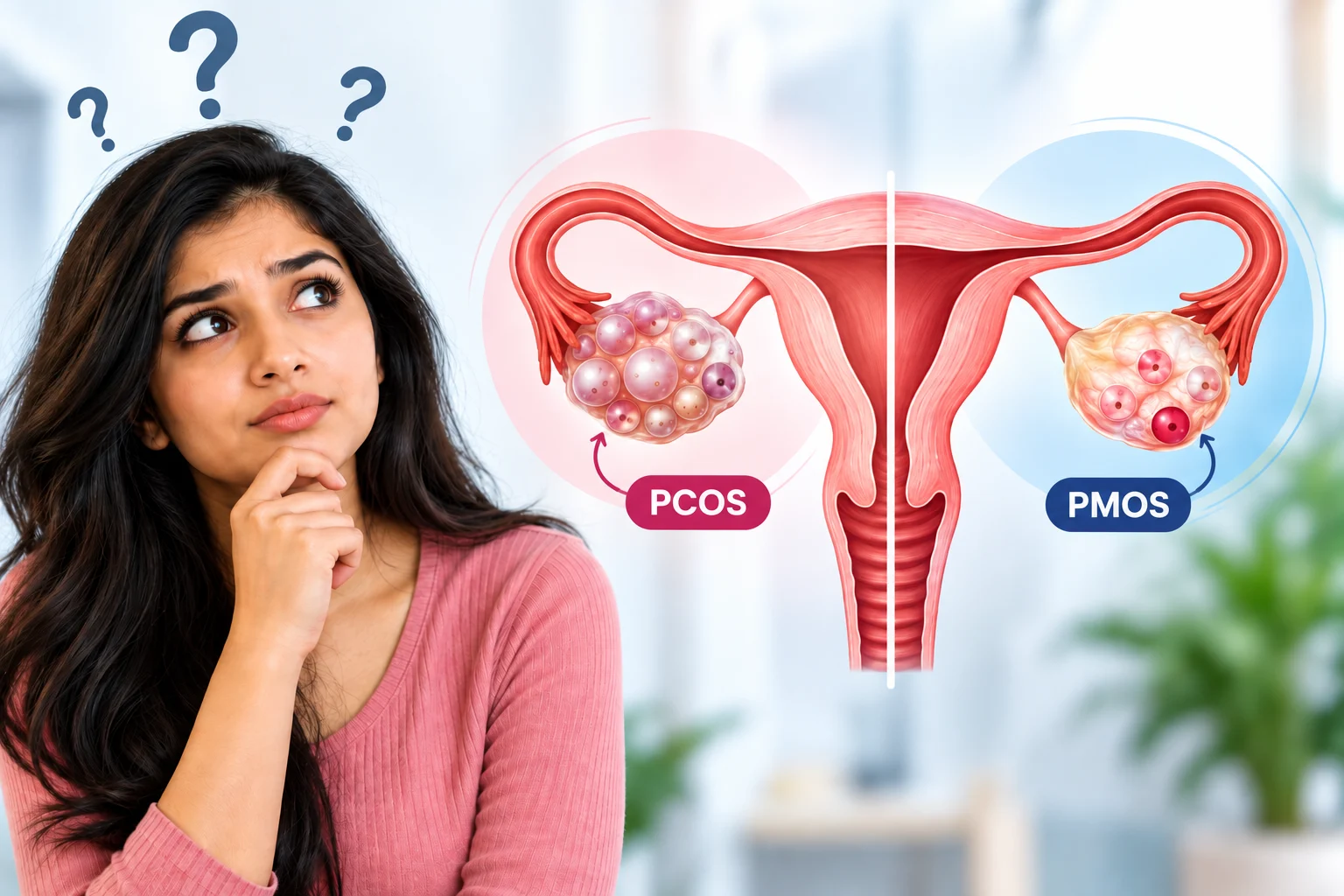
You've probably typed it into Google at 1 a.m.: "Can PCOS be cured permanently?" Maybe after a doctor told you to "just lose weight." Maybe after your third cycle skipped in a row. Maybe after a friend swore some tea "cured" hers in three months.
Here's the honest answer, the one you deserve before anything else: no, PCOS (also called PMOS or PCOD) cannot be permanently cured — but it can be put into long-term remission, where symptoms fade into the background and stop running your life. That distinction matters more than it sounds like it should, and by the end of this article you'll understand exactly why.
Why "cured" is the wrong question
PCOS isn't an infection you clear or a fracture that heals. It's a pattern in how your body regulates three interconnected systems — insulin, ovulation, and androgen (male hormone) levels. When researchers renamed the condition PMOS (Polyendocrine Metabolic Ovarian Syndrome) in 2026, it was precisely to make this clearer: this is a metabolic and endocrine pattern, not a single fixable defect. Read: PCOS Is Now Called PMOS — The 2026 Name Change Explained
That's why no pill, procedure, or 21-day detox "cures" it. Anyone promising a permanent fix in a bottle is selling you something. What's real, though, is this: those same three systems — insulin, ovulation, androgens — can become far more stable with the right care. For many women, stable enough that periods regularize, skin clears, hair growth settles, and PCOS stops being the thing they think about every day.
What remission actually looks like
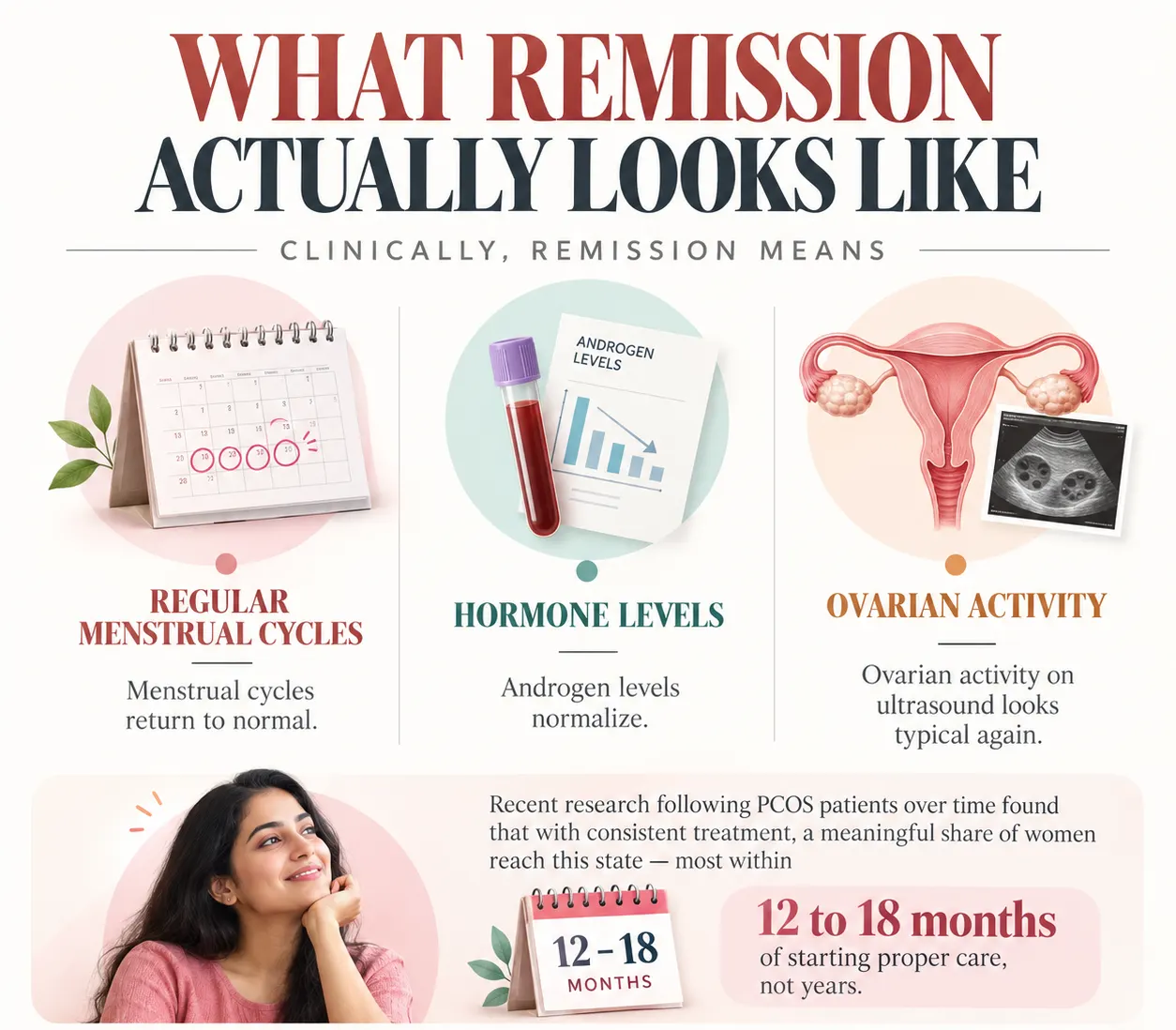
Clinically, remission means regular menstrual cycles return, androgen levels normalize, and ovarian activity on ultrasound looks typical again. Recent research following PCOS patients over time found that with consistent treatment, a meaningful share of women reach this state — most within 12 to 18 months of starting proper care, not years.
That's not a guarantee. It's also not nothing. It means the goal isn't chasing an impossible cure — it's getting your specific version of PCOS/PMOS into remission, and staying there.
PCOS looks different on everyone — which is why generic advice fails
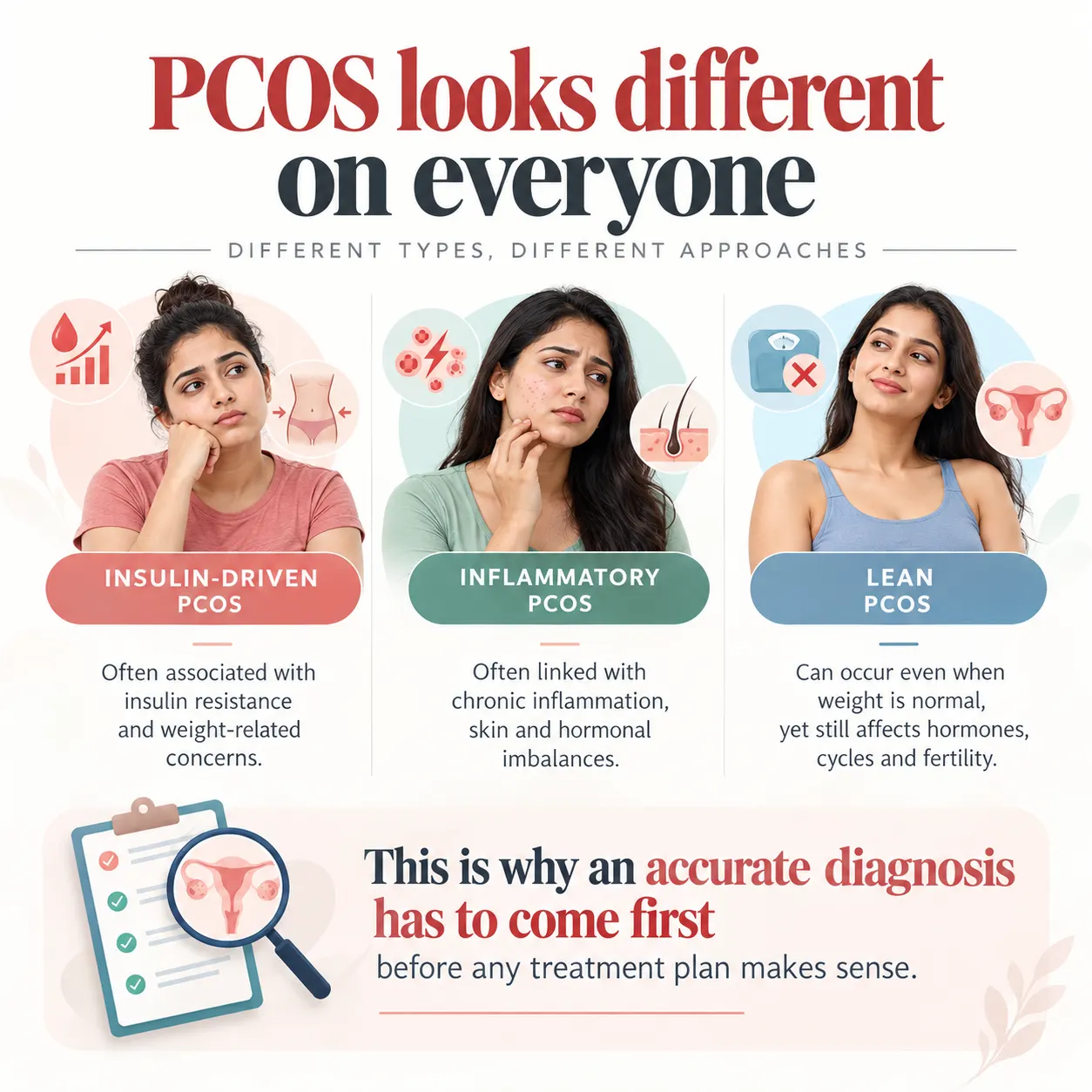
One of the biggest reasons women feel like nothing works is that they're following advice written for a different type of PCOS than the one they actually have. Insulin-driven PCOS, inflammatory PCOS, and lean PCOS (where weight was never the issue) all need different starting points. Read: 4 Types of PCOS/PMOS Explained and Lean PCOS/PMOS: When You're Not Overweight But Still Have the Condition
This is also why an accurate diagnosis has to come first, before any treatment plan makes sense. Read: How PMOS (PCOS) Is Diagnosed in 2026
What actually moves the needle toward remission
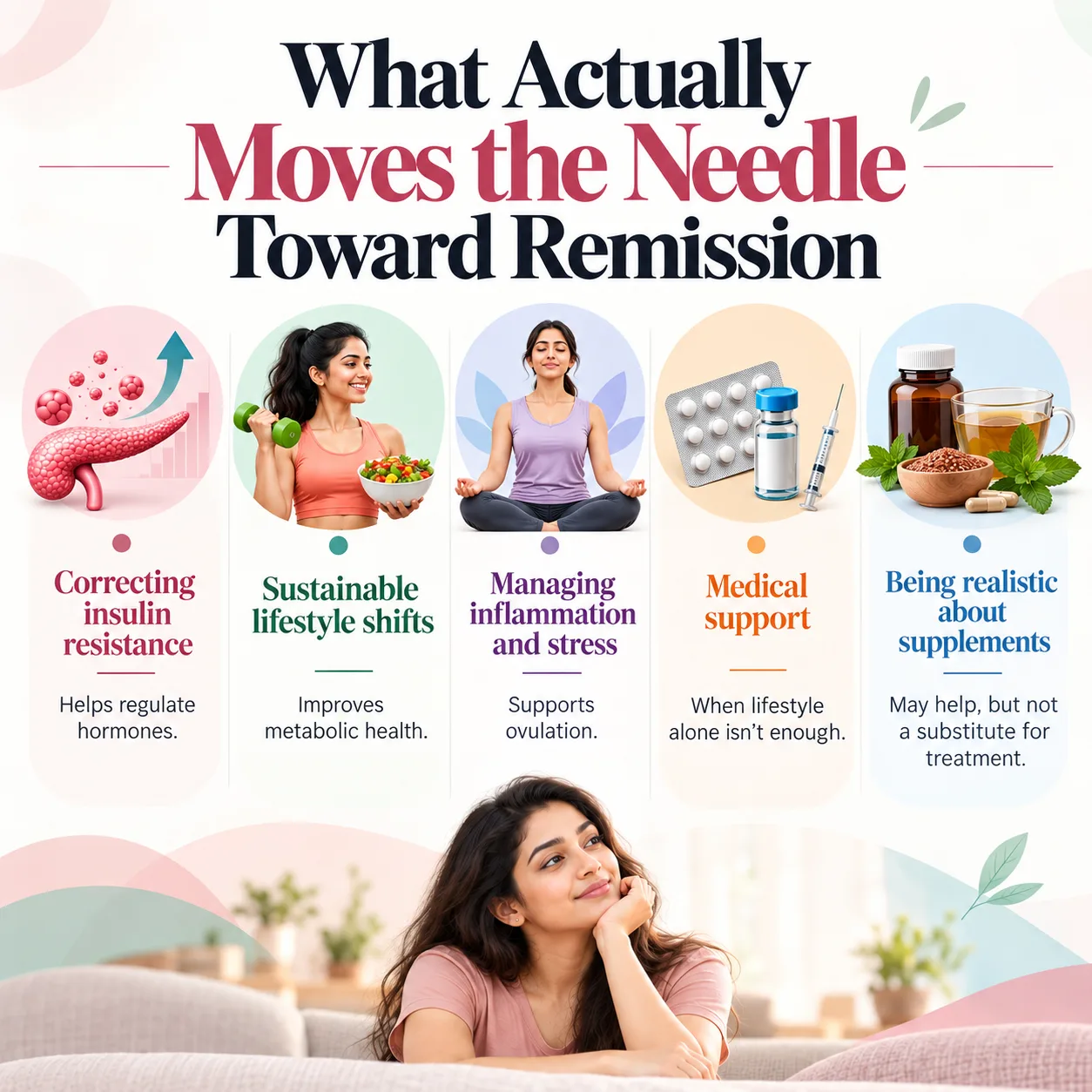
If facial hair or acne are part of what you're dealing with, those symptoms have their own root cause and their own path to control. Read: PCOS/PMOS/PCOD Facial Hair (Hirsutism) — Causes & Treatment
The bottom line
PCOS/PMOS is a lifelong pattern, not a life sentence. There's no switch to flip — but there is a path to a body that feels predictable again: cycles you can count on, skin and hair that aren't a daily battle, and hormones working with you instead of against you. That's not a smaller goal than "cure." For most women, it's the goal that actually changes their life.
Start with a conversation. A proper diagnosis and a plan built around your specific type of PCOS/PMOS is the real first step — not another supplement, not another diet. Book your hormonal evaluation with Dr. Shruti Shah or WhatsApp +91 93215 05185.
You may also find our free guide useful: 50 Conversations Every Woman with PCOS Deserves to Have
Frequently Asked Questions
Is PCOS/PMOS curable?
No. PCOS/PMOS is a chronic hormonal and metabolic condition with no permanent cure. However, it can be brought into long-term remission, where symptoms like irregular periods, acne, and excess hair growth significantly improve or resolve with proper treatment.
Can PCOS go away on its own?
PCOS/PMOS doesn't resolve on its own, but with sustained treatment — addressing insulin resistance, hormone regulation, and lifestyle factors — many women reach a stable, symptom-light state that functions like remission.
How long does it take to see improvement in PCOS symptoms?
With consistent, correctly targeted treatment, many women see meaningful improvement within 3 to 6 months, with full clinical remission often achieved within 12 to 18 months.
Do I need medication, or can diet alone manage PCOS/PMOS?
It depends on your specific type of PCOS/PMOS. Lifestyle changes help everyone, but insulin-driven or more severe cases often need medical support alongside them for lasting results — a proper diagnosis will clarify what you actually need.
Is PMOS the same as PCOS?
Yes. PMOS (Polyendocrine Metabolic Ovarian Syndrome) is the updated 2026 name for what was previously called PCOS and PCOD — same condition, renamed to better reflect its metabolic and hormonal nature.
Dr. Shruti Shah's PMOS & Hormonal Health Clinic
1st floor, Darshan Orthopaedic Surgical Clinic & Maternity Home, Swami Vivekanand Rd, opp. Milap PVR Theatre, Malad West, Mumbai 400064
Phone: +91 93215 05185
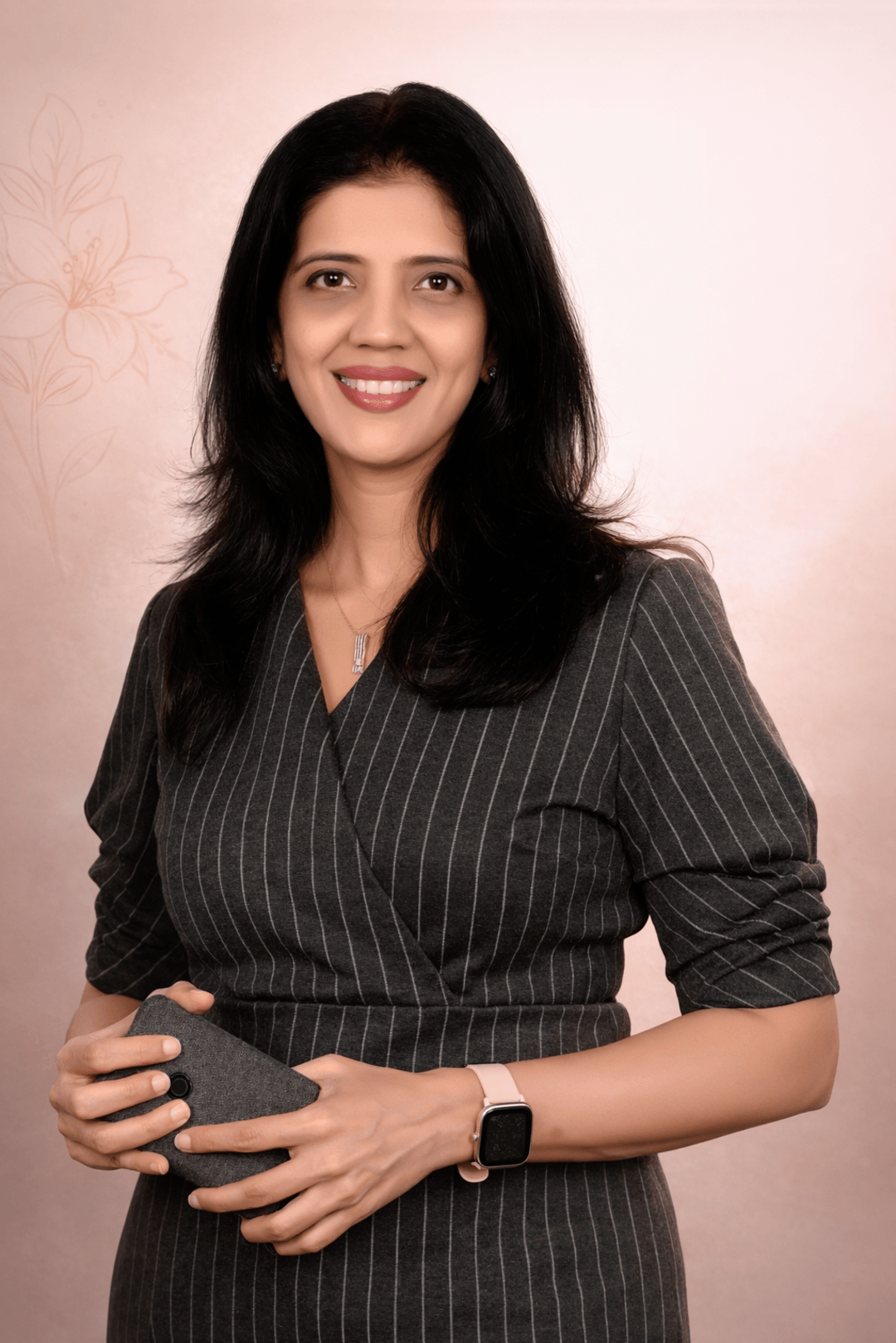
Dr. Shruti Shah
Providing advanced women's health and hormonal wellness solutions. Your health is our prime priority.