Berberine for PCOS: What the Research Actually Shows

The short answer
You've probably seen it on Instagram — berberine, called "nature's Ozempic," promising to fix PCOS symptoms overnight. Before you add another bottle to your shelf, it's worth asking: what does the actual research say?
At our PCOS treatment clinic in Mumbai, patients bring us screenshots of berberine claims every week. Some of it holds up. Some of it doesn't. Here's the honest, evidence-based answer — not a sales pitch.
It starts with insulin, not willpower
Most PCOS symptoms — irregular periods, hormonal acne, unwanted facial hair, stubborn weight gain — trace back to one root cause: insulin resistance. When insulin runs high, the ovaries respond by producing excess androgens. That's the hormonal imbalance driving what you're seeing in the mirror, not a lack of discipline.
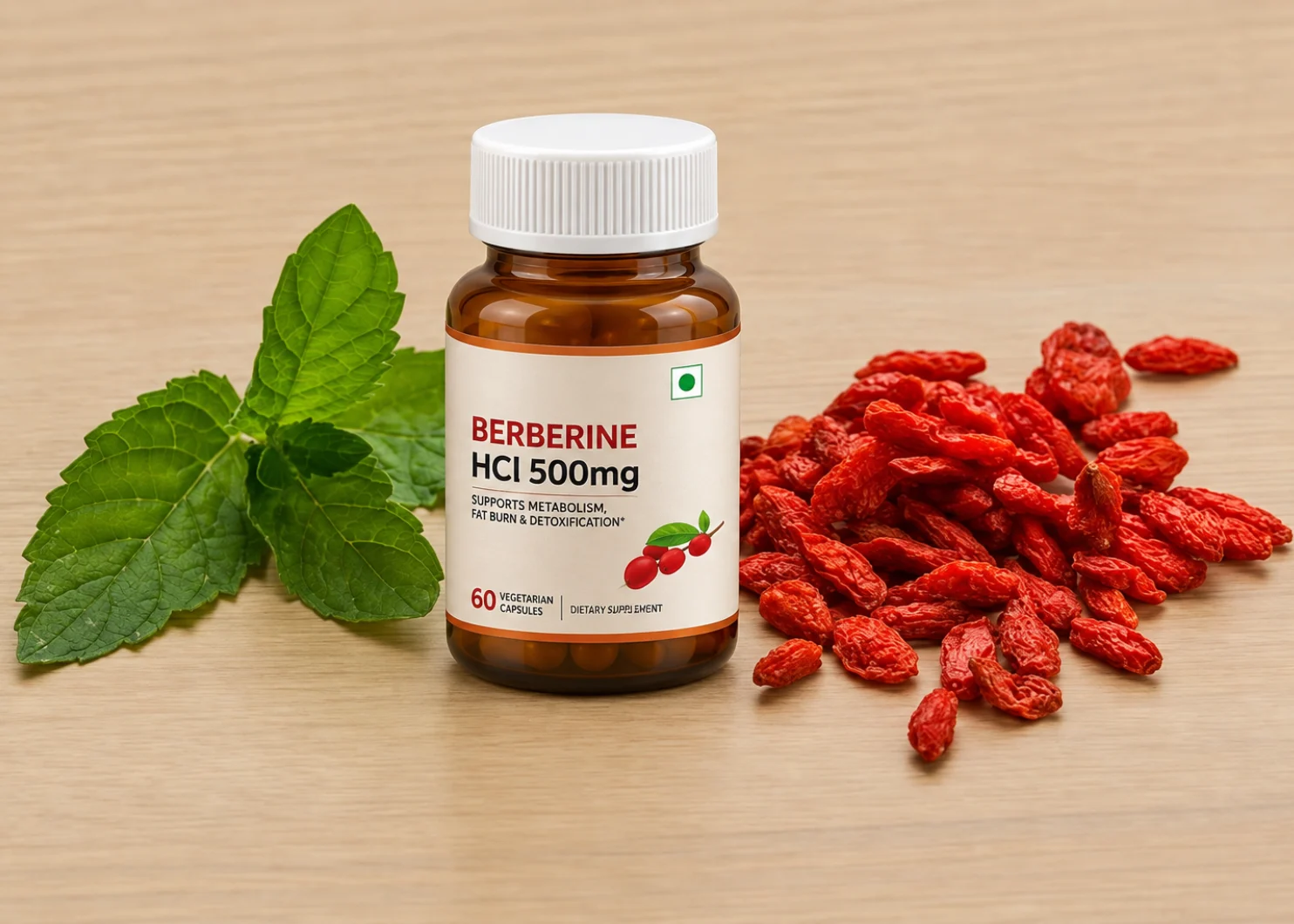
Berberine is a plant alkaloid found in herbs like Berberis vulgaris. Unlike most PCOS supplements, it actually has randomized controlled trial data behind it in women with PCOS specifically — not just borrowed research from diabetes studies.
How berberine works in PCOS
Three mechanisms show up consistently across the research:
- Insulin sensitivity — berberine helps cells respond better to insulin, lowering the circulating insulin that drives PCOS symptoms in the first place.
- Lower androgens — with less insulin signalling, the ovaries produce less testosterone. Multiple trials show measurable drops in total testosterone and the LH/FSH ratio.
- Better lipid profile — trials consistently show improvements in cholesterol and waist circumference, which matters for long-term metabolic health, not just PCOS symptoms.
What the clinical trials found
A pooled analysis across several randomized trials, covering over 570 women with PCOS, found berberine meaningfully lowered total testosterone and LH/FSH ratio compared to placebo. Head-to-head trials against metformin — the most commonly prescribed insulin-sensitizing medication — found berberine reduced waist circumference, waist-to-hip ratio, and cholesterol more effectively, without higher rates of stomach-related side effects.
A separate pooled review across five clinical studies and over 1,000 women concluded that berberine is a safe and promising option for PCOS management.
One honest caveat: the current evidence doesn't yet show berberine improves live birth rates or pregnancy outcomes on its own. Its proven strength is metabolic and hormonal — not a fertility treatment by itself.
Berberine vs. metformin: the honest comparison
| Marker | Berberine | Metformin |
|---|---|---|
| Insulin resistance | Improves it | Improves it |
| Testosterone / LH-FSH | Larger reduction in several trials | Modest reduction |
| Cholesterol & waist circumference | Greater improvement | Smaller effect |
| Stomach side effects | Comparable to placebo | Common early on |
| Track record | Newer PCOS-specific research | Decades of clinical use |
This isn't either/or. As a PCOS specialist in Malad West, Dr. Shruti often considers berberine alongside — not instead of — other parts of a treatment plan, based on what a patient's labs actually show.
Who benefits most from berberine
PCOS isn't one condition — it shows up differently woman to woman. The research points to one subtype responding best: insulin-resistant PCOS, marked by PCOS-related weight gain concentrated around the midsection, higher fasting insulin or blood sugar, skin tags or darkened skin patches, and irregular cycles alongside these metabolic signs.
A proper hormonal evaluation — fasting insulin, HOMA-IR, and androgen panels — tells us more in one visit than months of trial-and-error with supplements.
Dosing used in clinical trials
Most PCOS trials used 500mg of berberine, three times daily with meals, for a total of 1,500mg per day. This is the researched dose — not a self-start recommendation. Berberine interacts with several common medications and hasn't been studied as safe in pregnancy. This decision belongs in a consultation with a hormonal health doctor in Malad, not a supplement aisle.
You're not imagining it. This is treatable.
If you've been dismissed, told to "just lose weight," or left to figure out PCOS from Instagram comments — that ends here. Let's find out if berberine, or something else entirely, is the right fit for your hormones.
Start with a conversation. WhatsApp Dr. Shruti at 9321505185 or book your hormonal evaluation at drshrutishahclinic.com.
Common Questions About Berberine for PCOS
Is berberine as effective as metformin for PCOS?
In several head-to-head trials, berberine showed greater improvement in cholesterol, waist circumference, and androgen levels than metformin, with similar tolerability. Both are considered valid options depending on your specific hormonal profile.
What dose of berberine is used for PCOS?
Clinical trials most commonly used 500mg taken three times daily with meals, totaling 1,500mg per day. Always confirm dosing with a doctor before starting.
Can berberine help with PCOS-related weight gain?
Berberine improves insulin resistance, which is the underlying driver of PCOS-related weight and body composition changes for many women — it works on the hormonal cause, not just the symptom.
Does berberine help with fertility in PCOS?
Current research shows berberine improves insulin resistance and hormone levels, but there isn't yet solid evidence that it improves live birth rates or pregnancy outcomes on its own.
Is berberine safe to take without a doctor's guidance?
No. Berberine interacts with several common medications and hasn't been studied as safe during pregnancy. It should be started under medical supervision, especially alongside other PCOS treatments.
Who is the best candidate for berberine in PCOS?
Women with insulin-resistant PCOS — typically marked by central weight gain, elevated fasting insulin, skin tags, or darkened skin patches — tend to respond best, based on current research.
Consult
Insulin resistance is the treatable core of PMOS and PCOS. Assessment requires the right tests — not just a fasting sugar — and treatment should be matched to your metabolic status and reproductive plans.
Dr. Shruti Shah's PMOS & Hormonal Health Clinic
1st floor, Darshan Orthopaedic Surgical Clinic & Maternity Home, Swami Vivekanand Rd, opp. Milap PVR Theatre, Malad West, Mumbai 400064
Phone: +91 93215 05185