
Snoring, Tiredness and PCOS, PMOS & PCOD: Could It Be Sleep Apnoea?
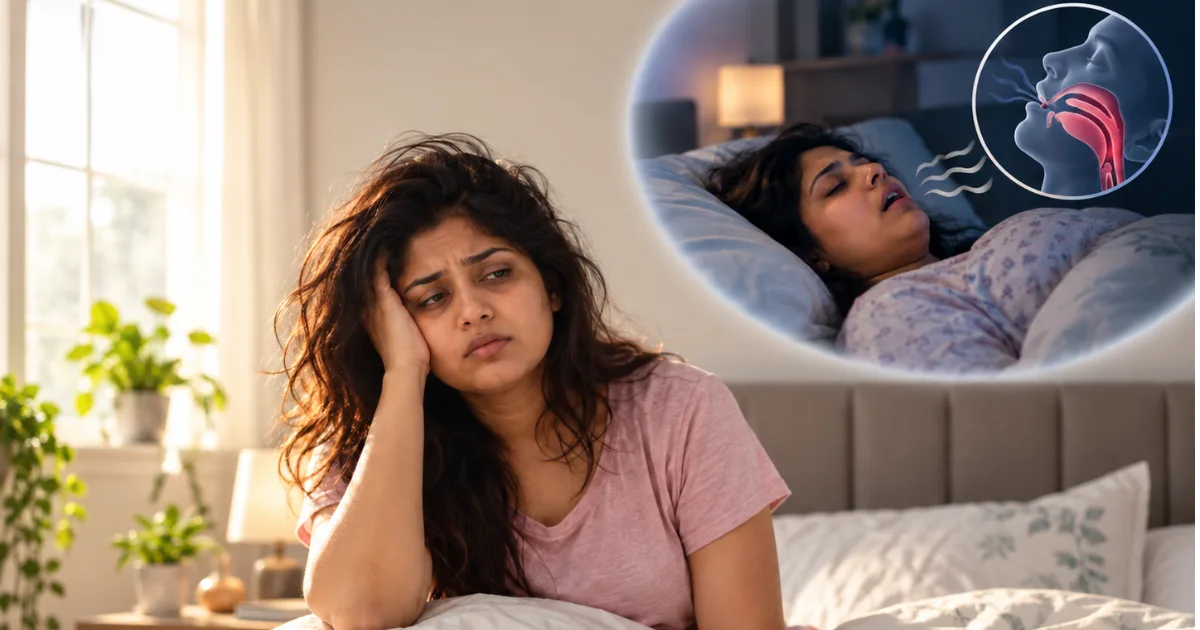
You slept eight hours. You wake up feeling like you slept two.
You have heard the reasons. It is stress. It is your thyroid. It is "just PCOS." You drink more coffee, go to bed earlier, and the tiredness stays.
For some women with PCOS, PMOS and PCOD, there is one more possible reason that rarely gets asked about: sleep apnoea. It is common, it can be treated, and it is worth knowing about.
In sleep apnoea, your breathing briefly narrows or stops, again and again, while you sleep. You do not remember it. You only feel the result: tiredness, morning headaches, broken sleep, low mood. Most women with PCOS, PMOS and PCOD do not have it. But it is more common in women with these conditions, so it is worth asking about if the signs fit. Only a sleep study can confirm it.
Does this sound familiar?
- You wake up tired even after 7 or 8 hours in bed.
- You get headaches in the morning.
- Someone at home says you snore, or you wake up with a dry mouth or a gasp.
- You feel sleepy in the day. You nod off at your desk or in the car.
- You wake again and again at night, or at 3 in the morning.
- Your mood is low or anxious, and your mind feels foggy.
One or two of these can have many causes. Several together, especially with snoring, are worth mentioning to your doctor.
What is going on while you sleep
When you sleep, the muscles in your throat relax. In some people, the airway narrows so much that breathing dips or pauses. Think of a straw pinched in the middle. Air still tries to pass, but not enough.
Your brain notices and wakes you for a second, so you can breathe. You do not remember it. But if this happens many times a night, your body never gets a proper rest.
Why does it show up more with PCOS, PMOS and PCOD? Insulin resistance and higher male hormones seem to play a part. Extra weight around the middle raises the chance too. But it is not only about weight. Women of normal weight can have it as well.
It does not always look like loud snoring
This is why it is missed. In women, sleep apnoea often looks different from the picture most people have in mind:
- Tiredness more than loud snoring.
- Poor or broken sleep, or trouble falling asleep.
- Morning headaches.
- Low mood, anxiety, bad dreams.
So a woman can be told it is anxiety or depression for years, when her sleep was never checked.
Myth versus fact
What you can do this week
- Ask whoever sleeps near you if you snore or seem to stop breathing.
- If you sleep alone, record your sleep on your phone for a night or two.
- Note morning headaches, a dry mouth and how sleepy you feel in the day.
- Try sleeping on your side. Lying flat on your back makes snoring worse for many people.
- Avoid alcohol close to bedtime.
- If several signs fit, tell your doctor. Take your notes or recording.
How it is checked
Your doctor will ask about your sleep, snoring and daytime sleepiness. A short questionnaire can raise suspicion. But a questionnaire cannot confirm sleep apnoea or tell how strong it is.
The real test is a sleep study. It records your breathing, oxygen level and heartbeat through the night. Some can be done at home, some in a sleep centre. Your doctor will refer you to a sleep specialist, such as a chest physician or sleep physician, who decides which test suits you.
You do not need a sleep study just because you feel tired. It is for women whose signs fit.
If it is confirmed
The main treatment for moderate to severe sleep apnoea is a CPAP machine. You wear a soft mask at night, and gentle air pressure keeps your airway open. Many people need a few weeks to get used to it. Your sleep specialist can adjust the mask and settings if it is uncomfortable.
Other steps help too: sleeping on your side, cutting alcohol near bedtime, managing body composition if that applies to you, and being careful with sleeping pills.
Be clear about what it does. Treating sleep apnoea is about sleeping well and feeling better. It can help your energy and may help blood pressure and sugar a little. It is not a PCOS, PMOS or PCOD treatment, and it will not fix your periods on its own.
Two situations to mention
- Surgery planned: tell your anaesthetist beforehand if you snore or think you may have sleep apnoea.
- Pregnant or planning: if you snore, tell your doctor. Sleep apnoea can become more common in pregnancy.
Common questions
I am lean. Can I still have sleep apnoea?
Yes. It is more likely with extra weight around the middle, but women of normal weight can have it. If your signs fit, do not let your weight be the reason it is dismissed.
I do not snore. Can I still have it?
Yes. Many women have tiredness, morning headaches and poor sleep without loud snoring.
Is my tiredness just PCOS, PMOS or PCOD?
It can be part of it. But it can also come from sleep apnoea, low iron, thyroid or poor sleep habits. They can overlap, which is why it is worth checking rather than guessing.
Which doctor should I see first?
Start with your regular doctor or gynaecologist. They can ask the right questions and refer you to a sleep specialist if needed.
Will I need CPAP for life?
It depends on how strong your sleep apnoea is and what is causing it. Your sleep specialist will guide you. Lifestyle changes can make a difference too.
Will treating it help my periods or hormones?
Do not count on it. CPAP treats the breathing problem. It may help sleep, energy, blood pressure and sugar a little. Your PCOS, PMOS or PCOD still needs its own plan.
Does everyone with PCOS, PMOS or PCOD need a sleep study?
No. Most do not. It is for women whose signs fit, such as snoring with daytime sleepiness, morning headaches, or breathing pauses seen by someone.
Tired, and nobody has asked why?
A hormonal review looks at the whole picture: cycles, insulin, thyroid and sleep. If your signs fit, we can point you to the right next step.
When to see a doctor
- Loud snoring with gasping or choking at night.
- Someone has seen you stop breathing in your sleep.
- You fall asleep while driving or at work. Please do not drive when drowsy.
- Headaches in the morning, most days.
- You are tired despite 7 to 8 hours of sleep, for several weeks.
- You have high blood pressure and also snore.
- You are pregnant and snore.
What a consultation generally involves
You are asked about your sleep, snoring, daytime sleepiness and mood. Your PCOS, PMOS or PCOD is reviewed: cycles, symptoms, and tests such as sugar, insulin and thyroid if needed. Your blood pressure, waist and neck may be measured. If your signs fit, you may be referred to a sleep specialist. Here is how PMOS (PCOS) is diagnosed.
Also read: how insulin resistance is tested, lean PCOS and PMOS, the 4 types of PCOS and PMOS, and irregular periods. More answers are on the clinic's PCOS and PMOS FAQ page.
Read next
Lean PCOS/PMOS: When Your Weight Is Normal but the Condition Is Real Insulin Resistance in PMOS (PCOS): How to Test It, Read It, and Treat It PCOS/PMOS/PCOD and Desk Jobs: Daily Habits That HelpStart with a conversation.
You have been told to sleep more, stress less, drink less coffee. You deserve a real answer. Message the clinic on WhatsApp, or book a hormonal evaluation through the website.
Dr. Shruti Shah's PCOS & Hormonal Health Clinic, 1st floor, Darshan Orthopaedic Surgical Clinic & Maternity Home, Swami Vivekanand Rd, opp. Milap PVR Theatre, Malad West, Mumbai 400064.